

For millions of individuals recovering from surgery, living with progressive muscle weakness, or experiencing age-related mobility decline, the simple act of standing can become a monumental challenge. For caregivers, assisting with these transfers multiple times a day often leads to chronic back pain, debilitating injuries, and overwhelming physical fatigue. The bridge between total dependence and safe, dignified movement lies in a single device: the electric sit to stand lift. Unlike full-body sling lifts that require complete patient passivity, an electric sit to stand lift actively engages the patient’s own weight-bearing ability, providing a dynamic and therapeutic transfer experience. This technology is not merely a piece of equipment; it is a tool for maintaining muscle tone, preserving a patient’s sense of autonomy, and radically reducing the physical risks that professional and family caregivers face every shift. Understanding the mechanics, benefits, and specific applications of these lifts is critical for anyone involved in long-term care, home health, or rehabilitation therapy.
How an Electric Sit to Stand Lift Transforms Mobility and Care
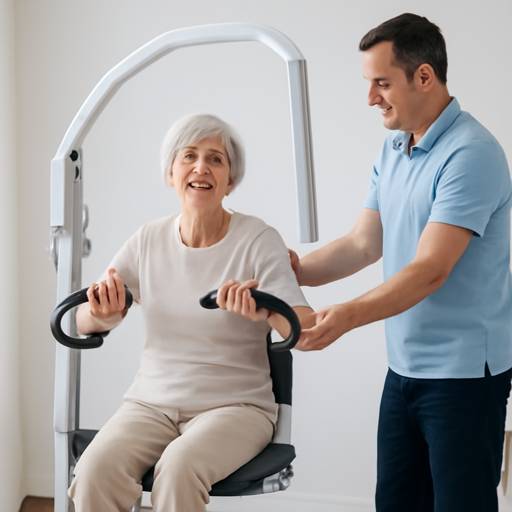
The fundamental difference between a standard patient lift and an electric sit to stand lift is the patient’s active participation. A full-body sling lift hoists a non-weight-bearing individual from a seated position, suspending them completely. In contrast, a sit-to-stand lift is designed for patients who have some weight-bearing capacity in their legs and sufficient upper body strength to hold onto a handle or support bar. The process begins with the patient seated on the edge of a bed, chair, or wheelchair. A specialized knee pad is positioned against the patient’s shins to prevent forward sliding and provide a stable pivot point. A gentle, supportive vest or sling is placed around the patient’s back, ensuring secure engagement without constricting the arms.
Once the patient is secured and the lift is positioned, the electric actuator activates. The lift mechanism gently pivots forward and upward, guiding the patient from a seated posture to a stable, upright standing position. This movement mimics the natural biomechanics of standing—leaning forward at the hips, shifting weight to the feet, and extending the legs. The electric motor provides the necessary assistive power, meaning the patient does not need to generate the full force required to stand. This reduces the risk of falls, fainting, or joint strain. Once standing, the patient can be wheeled a short distance to a toilet, shower chair, or bedside commode. The reverse process is just as controlled: the lift gently lowers the patient back to a seated position. This controlled descent is a critical safety feature. By engaging the patient’s core and leg muscles during every transfer, the electric sit to stand lift actively combats muscle atrophy, improves circulation, and promotes a faster return to independent ambulation. For the caregiver, the electric motor does the heavy lifting, eliminating the hazardous pulling and twisting motions that lead to overexertion and injury.
The impact goes beyond physical safety. For many patients, being lifted in a full-body sling feels dehumanizing and frightening. An electric sit to stand lift preserves a sense of normalcy. The patient is upright, facing the world, and actively participating in their own transfer. This psychological benefit is profound. It reinforces a sense of agency and reduces the anxiety and depression often associated with total dependence. Care facilities that integrate these devices into their daily protocols often report higher patient satisfaction scores and a noticeable improvement in morale among both residents and staff.
Key Features and Technology in Modern Electric Sit to Stand Lifts
Choosing the right electric sit to stand lift requires a clear understanding of the technical specifications that separate a safe, durable device from one that poses operational risks. The first and most critical component is the electric actuator. This is the motor that drives the lifting mechanism. High-quality lifts use a linear actuator that offers a smooth, consistent motion without jerking or stalling. The lift capacity is the next vital specification. Most residential and long-term care models handle between 350 and 450 pounds, ensuring they can accommodate a wide range of patient sizes safely. It is essential to select a lift with a capacity rating that exceeds the patient’s actual weight to maintain a safety margin. Overloading the actuator can lead to mechanical failure and serious injury.
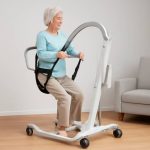
The chassis design directly influences maneuverability and stability. A wide, base frame with locking casters provides a stable platform during transfers. The casters themselves must be high-quality swivel wheels that roll smoothly over carpet, tile, and thresholds. Brakes on the rear casters are non-negotiable; they lock the lift in place during the critical standing phase, preventing the unit from rolling backward under load. The knee pad assembly is another area where design matters. It should be padded, contoured to the shins, and adjustable in height to align properly with patients of different statures. A poorly placed knee pad increases the risk of the patient sliding down or losing balance during the lift.
Modern units frequently incorporate digital controls and safety overrides. A handheld pendant or remote control allows the caregiver to operate the lift with one hand while supporting the patient with the other. Some advanced models feature a weight scale integrated into the lift frame, enabling caregivers to monitor patient weight during transfers—a valuable tool for tracking health changes without requiring a separate scale. The sling or vest attachment system is crucial. Look for a quick-release mechanism that allows the vest to be attached and detached rapidly without pinching fingers or damaging fabric. The vest itself should be made of breathable, washable material such as nylon or polyester mesh. It should distribute pressure evenly across the back and ribs, avoiding pressure points that could cause skin breakdown. For patients with fragile skin or poor circulation, a vest with extra padding or a cut-out design for the shoulders can prevent chafing. Finally, consider the base width. A lift with an adjustable-width base can be widened for stability during standing and narrowed to fit through standard doorways for transport between rooms. This adaptability is a defining feature of a high-end electric sit to stand lift and is essential for use in varied home environments.
Real-World Applications and Clinical Case Studies for Electric Sit to Stand Lifts
The theoretical benefits of a sit-to-stand lift are validated by real-world clinical outcomes. In skilled nursing facilities, these devices are a cornerstone of fall prevention programs. A case study from a 120-bed rehabilitation center in the Midwest documented a 45% reduction in patient falls during toileting transfers after implementing a protocol mandating sit-to-stand lifts for all patients requiring moderate-to-maximum assistance. The study further noted that caregiver back injuries related to patient handling dropped by 60% within the same six-month period. The facility attributed these gains directly to the lift’s ability to eliminate manual, high-risk transfers. This data highlights a core reality: the cost of a lift is often offset by a single avoided worker’s compensation claim or hospital readmission due to a fall.
Another compelling application is in home hospice and palliative care. A case documented by a visiting nurse association involved a 72-year-old woman with late-stage multiple sclerosis. Her husband, her primary caregiver, was experiencing severe shoulder strain from trying to assist her to the commode. Introducing an electric sit to stand lift transformed their daily routine. The husband reported that for the first time in months, he could transfer his wife without experiencing pain. The patient, in turn, felt safer and less anxious about falling, which reduced incidents of urinary incontinence caused by her fear of asking for help. The lift allowed them to maintain her dignity and stay at home longer than originally planned. This scenario is far from unique. For many families, an electric sit to stand lift is the difference between keeping a loved one at home and being forced into a nursing facility due to caregiver exhaustion.
In acute rehabilitation settings, the lift plays a therapeutic role. Occupational and physical therapists use it not just for transfers, but as a training tool. For a patient recovering from a hip replacement, the lift allows the therapist to control the loading of the surgical leg gradually. The patient can practice weight shifting and standing balance in a protected environment. The electric motor provides a variable level of assistance, meaning the therapist can reduce the power output as the patient gains strength. This progressive loading is essential for rebuilding neuromuscular pathways and confidence. A 2023 review in the Journal of Rehabilitation Medicine noted that patients who used sit-to-stand technology during their inpatient stay achieved independent standing an average of three days faster than those who relied solely on manual assistance from therapists. The conclusion was clear: early mobilization with safety and support accelerates recovery. For these reasons, the device is now considered an essential investment for any facility looking to optimize patient throughput and reduce staff fatigue. Whether in a bustling hospital or a quiet home bedroom, the electric sit to stand lift proves itself as a tool of both compassion and practical engineering, bridging the gap between dependence and mobility with every smooth, powered movement.


 Maria Dela Cruz