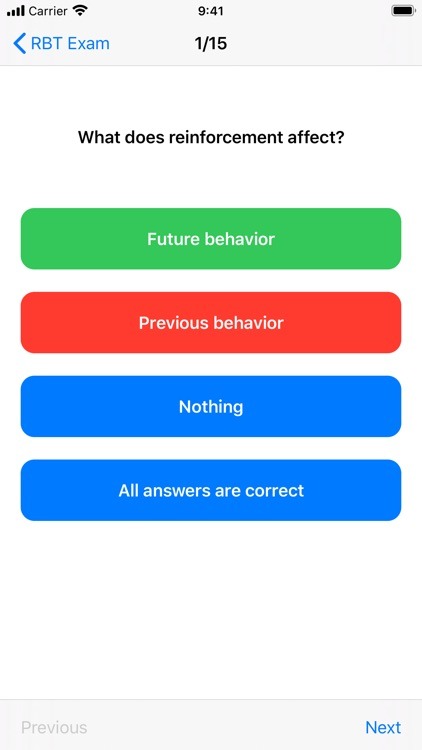
For decades, studying meant highlighting textbooks, rewatching lectures, and hoping something stuck. Today, an AI tutor does what static resources cannot: it adapts to your performance, identifies gaps in real time, and turns your own notes into an interactive learning experience. Instead of simply delivering information, an AI tutor engages you in the kind of active practice that builds long-term memory. Whether you are preparing for a university final, a professional certification, or a high-stakes entrance exam, the shift from passive review to AI-guided study can save hours while improving results.
What Makes an AI Tutor Different From Traditional Study Tools?
A traditional video course or textbook follows one path. An AI tutor, by contrast, builds a learning path around you. It can read lecture slides, PDF files, and handwritten notes, then convert them into structured summaries, practice questions, flashcards, and even audio recaps. This matters because understanding is not just about seeing information; it is about retrieving it in different formats. When an ai tutor asks you a question based on your own course material, it mimics the exam environment more closely than any generic quiz bank.
Under the hood, modern AI tutoring systems use natural language processing and machine learning to recognize concepts, generate questions, and evaluate your responses. For example, if you upload a chapter on cellular biology, the tutor may produce a summary of key mechanisms, create a mind map of related processes, and then generate multiple-choice or short-answer questions that target weak spots. If you repeatedly miss questions on enzyme activity, the system notices and offers more practice on that topic. This level of personalization was once available only through a private human tutor.
Another key difference is the feedback loop. With a textbook, you may not know you misunderstood a concept until the exam. With an AI tutor, feedback arrives instantly. The tutor can explain why an answer was incorrect, restate the core idea in simpler terms, and present a new question to test whether the correction stuck. This immediate correction reduces the chance of reinforcing errors and keeps study sessions moving at the right pace. Over time, the system builds a profile of your strengths and weaknesses, allowing you to focus on areas that actually need attention rather than reviewing everything equally.
This shift from static content to adaptive interaction is the core reason students describe AI tutoring as feeling less like reading and more like having a conversation with a very patient expert. The best tools do not just answer questions; they anticipate what you need next. They can compress long lectures into digestible chunks, convert dense PDFs into audio summaries for commutes, and create flashcards that align with the exact terminology used by your instructor. The result is a study session that feels more efficient and more personal.
Why Learners Are Turning to AI Tutors for Exam Preparation
Exam preparation places enormous pressure on working memory. You must retain facts, understand relationships, and apply concepts under time limits. This is where an AI tutor becomes especially valuable. Rather than passively rereading notes, the tutor pushes you into active recall, the process of pulling information from memory. Active recall is one of the most effective study strategies known in cognitive psychology. When an AI tutor presents a question and asks you to answer before showing the solution, it strengthens the neural pathways that make future retrieval easier.
Spaced repetition is another science-backed technique built into many AI tutoring platforms. The system schedules reviews at intervals designed to interrupt forgetting. If you learn a formula today, the tutor may ask you to recall it tomorrow, then three days later, then a week later. Each successful recall extends the retention window. Without this scheduling, most learners overestimate their knowledge and stop reviewing too early. A well-designed ai tutor can transform a passive set of notes into an active review system that keeps important information alive until exam day.
Practical scenarios show the impact. Consider a nursing student with 400 pages of lecture slides and no clear way to prioritize. Instead of spending hours making flashcards manually, she uploads the slides to an AI tutor. The platform identifies the most repeated terms, creates practice questions, and quickly reveals that her weakest area is pharmacology interactions. She spends the next two days focusing on that module. On exam day, she performs better not because she studied more hours, but because she studied the right things. Similarly, a law student preparing for the bar can turn case briefs into audio recaps and listen while commuting, then use AI-generated questions to test rule application in a format similar to the real exam.
For busy professionals, scheduling flexibility matters. A human tutor may be available once a week; an AI tutor is available at midnight, during a lunch break, or on a Sunday morning. It never tires, never judges a repeated mistake, and never rushes through a difficult topic. This makes high-quality tutoring accessible to learners who could not otherwise afford or schedule one-on-one support. The result is a more equitable and effective study experience.
Real-World Learning Scenarios Where an AI Tutor Delivers the Greatest Impact
An AI tutor can support a wide range of learning goals, from high school science to advanced professional certifications. The versatility comes from its ability to process different input formats and generate multiple study outputs. Here are some specific scenarios where the value becomes clear.
Turning messy lecture notes into structured revision material. Many students take incomplete or disorganized notes during class. An AI tutor can clean and structure those notes into summaries, identify the main ideas, and create a visual mind map that shows how concepts connect. This is especially helpful in subjects like anatomy, history, or economics, where relationships between ideas matter as much as individual facts.
Preparing for standardized tests with weak areas identified. Suppose an MBA candidate is preparing for the quantitative section of a graduate admissions test. The AI tutor delivers practice questions, tracks accuracy by topic, and identifies that probability and data sufficiency are dragging down the score. Instead of working through an entire prep book, the candidate can focus on those two areas. The tutor adjusts the difficulty as performance improves, providing an adaptive experience similar to the real computer-based test.
Learning technical skills with rapid feedback. For coding students, an AI tutor can explain concepts like recursion or object-oriented programming, generate short problems, and evaluate reasoning patterns. If a learner writes an incorrect logic flow, the tutor can point out the specific step where the logic broke. This tight feedback loop is often more efficient than watching long video tutorials that do not respond to individual errors.
Supporting different learning preferences and accessibility needs. Some learners remember more from listening than reading. An AI tutor can convert study material into audio recaps, allowing a student to review key points while walking, driving, or exercising. Others benefit from visual formats such as mind maps and diagrams. Because the AI can present the same content in multiple modes, learners can choose the format that fits their cognitive style. This multimodality is a major advantage over static textbooks or one-size-fits-all video courses.
In all of these scenarios, the common theme is adaptability. The AI tutor meets learners where they are, uses their actual course content, and adjusts the difficulty based on performance. This creates a level of personalization and efficiency that was previously difficult to achieve at scale. Students no longer need to wonder what to study next; the tutor tells them, based on data rather than guesswork.
Maria shares her passion for healthy living, travel adventures, and culinary explorations through engaging lifestyle content that inspires her readers.